What is a Potbelly?
Potbellies are among a variety of breeds and mixes of miniature pigs that include Vietnamese Pot-Bellied pigs, Kune Kunes, Juliana pigs and others. While smaller than a farm hog which will grow to 600-1000 pounds, these “miniature pigs” will typically grow as large as 100-250 pounds—not what most excited potbelly owners expect! In their effort to breed ever-smaller pigs (sold as micro or teacup pigs), the pet industry and backyard breeders create litters with a host of genetic health problems and deformities. Most “miniature pigs” grow much larger than anticipated and unfortunately end up in animal shelters or sanctuaries like Whispering Rise.
Read more about the myth of micro teacup pigs HERE from our partners at Best Friends.
Pigs as Pets
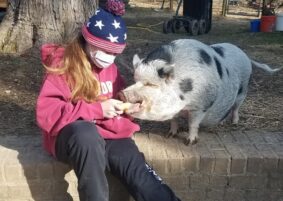
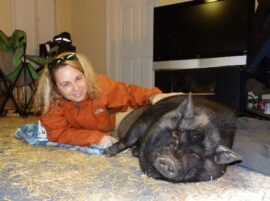
In the right circumstances, potbellied pigs can make excellent indoor or outdoor pets. Potbellied pigs, like all pigs, are intelligent, social and active. They require pig companions, exercise and a stimulating “pig-friendly” environment. Pigs are curious and smart and they benefit from mental challenges and training—just like a dog. Potbellies typically live 14-20 years, so a long commitment is required when adopting a pig.
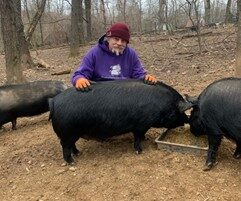
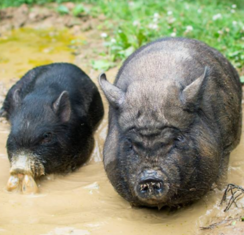
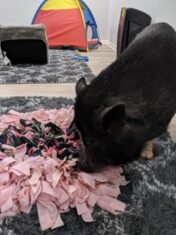
The ideal pig environment allows for outdoor pig fun like rooting, digging, sunbathing and wallowing/wading. Pigs are herd animals, so pig a companion is important to their well-being. Outdoor pigs need a spacious, secure enclosure and a warm and cozy house to protect them from the elements. Indoor environments must offer stimulation and the ability to practice instinctive behaviors like rooting. All future pig-parents should carefully research zoning laws for their home prior to making a commitment to a pig pair.
Many unwanted behaviors can arise if the potbellied pig’s environment does not offer them what they need. Lack of stimulation, lack of space and solo pig ownership can contribute to challenging behaviors.
If you are considering adding a potbellied pig or “miniature pig” to your family, we encourage you to schedule a visit to a pig sanctuary so you can meet a variety of adult potbellied pigs, learn what to expect, and find out more about their day-to-day needs. Additional information can be found HERE on Best Friends’ page.
Feeding Your Pet Pig
Overfeeding is a challenge many potbellied pig owners face. Pigs quickly become obese which can result in a host of health problems. Arthritis is common and even mechanical blindness can occur when rolls of fat grow over their eyes and block their vision. Pigs are hardwired to eat (and eat and eat) and they are excellent at convincing their people that they are starving!
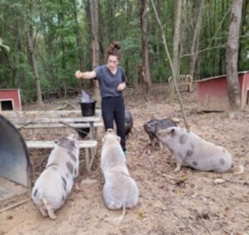
Careful nutrition and portion control are important to the long-term health of a companion pig. We find that potbellied pigs do best on a diet of high quality mini-pig pellets along with plentiful fresh or frozen vegetables. Mazuri Mini Pig Food is recommended and readily available—typically just ¾ to 1 cup of pellets twice per day along with unprocessed vegetables. Pigs can nibble on grass hay as a low-cal supplement (avoid alfalfa or clover hay). Fruits, which are high in calories, can be fed in small quantities as a treat. To avoid obesity and health issues, do not feed potbellies processed “people food,” hog feed, dog food, and salted foods. Read more information about feeding your potbellied pig on Best Friends’ page HERE.
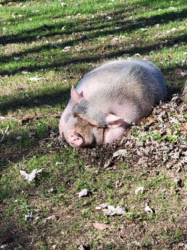
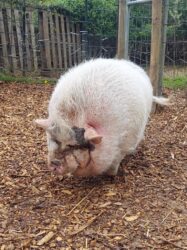
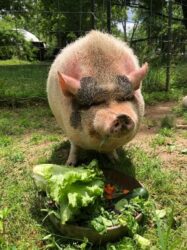
When William joined our sanctuary, he was so overweight that he was mechanically blind. The fat on his forehead covered his eyes and blocked his sight. He will lose weight gradually with exercise and a diet of mini-pig pellets and green vegetables.